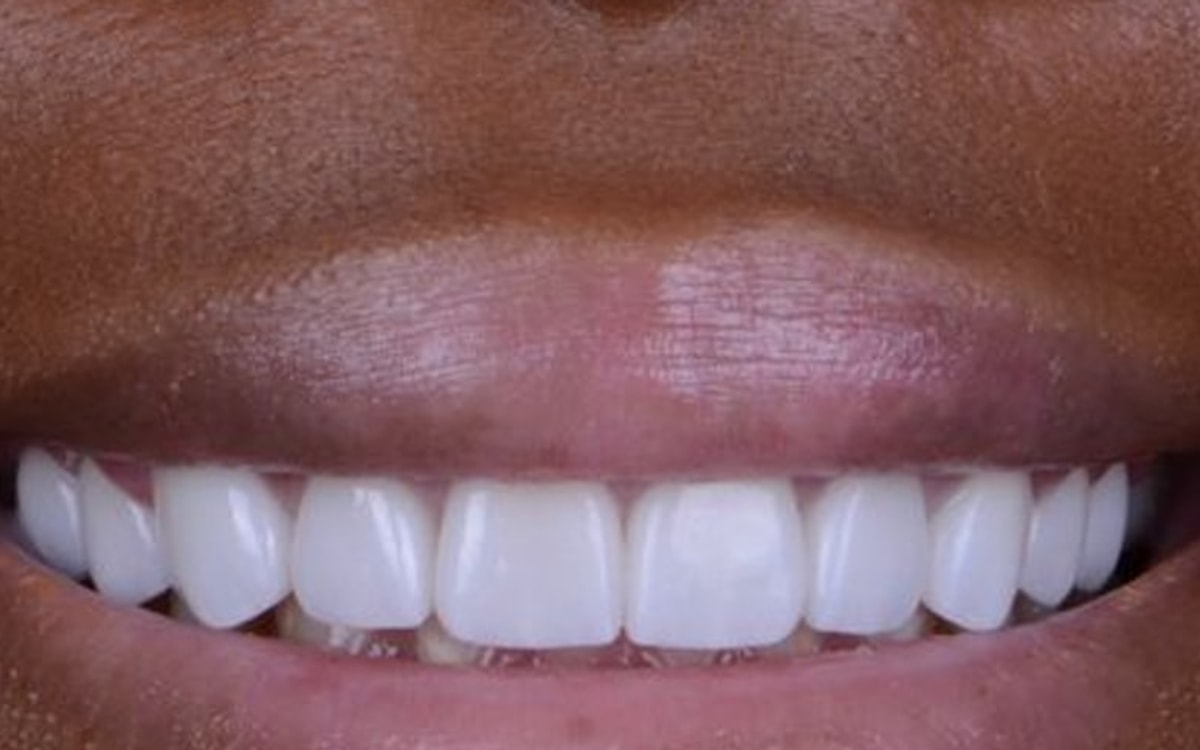
Natural-looking cosmetic dentistry is rarely about making every tooth identical. A smile feels believable when its shape, brightness, texture, and symmetry are considered in relationship to the patient's face, age, features, and personal preferences.
Proportion before perfection
Tooth length and width influence how a smile is perceived, but there is no single ideal measurement for every person. Lip movement, the amount of tooth visible at rest, facial proportions, and the position of the gumline all affect the design.
Small differences can preserve character. The goal is harmony—not a row of interchangeable teeth.
Color is more than a shade
Natural enamel reflects and transmits light in complex ways. A convincing restoration considers value, translucency, surface texture, and how color changes from the gumline to the edge of a tooth. Brighter does not always mean better; the right brightness is the one that belongs naturally within the face.
Health supports beauty
Cosmetic planning also includes the gums, bite, existing dental work, and long-term maintenance. Whitening, bonding, veneers, crowns, gum refinement, or restorative treatment may be considered alone or in combination, depending on clinical findings.
A beautiful result begins with an accurate diagnosis and a conservative plan. The treatment should support health and function while creating the visual refinement the patient wants.